
Trace Harrisonburg City Former Owners
Tracing a Harrisonburg City property backward means walking the deed chain one grantor at a time. Start with the newest deed. Each grantor in it was once a grantee. That earlier entry then points to the one before it. Pull the current owner of record and the parcel's legal description first. Then work through the SRA/COVERS index. Old entries may force a detour to book and page numbers, microfilm, or the clerk's help. A name alone is only a clue. Search Harrisonburg City property records by address to begin, and remember that a former owner did not always live on the land.
| Chain step | Transfer date | Grantor to grantee / instrument | Book/page or number |
|---|---|---|---|
| Newest transfer | Copy from the selected instrument. | Current grantee and prior grantor. | Enter the SRA reference. |
| Earlier acquisition | Use the prior deed date. | Prior grantee matched to the earlier grantor. | Follow the recorded citation. |
| Estate or correction | Use the filed instrument date. | Heirs, executor, administrator, or corrected party. | Record the clerk reference. |
| Historic fallback | Use the year shown in the finding aid. | Search the cited book or reel. | Ask the clerk or Library of Virginia. |
Keep in mind this is a worksheet, not a real chain from an actual Harrisonburg parcel. Fill every row from the instrument itself. Never link two names just because they look alike. Splits, estates, and subdivisions can change a parcel's legal description, so reconcile the description before stepping further back in the property records.
Harrisonburg City SRA Owner Index
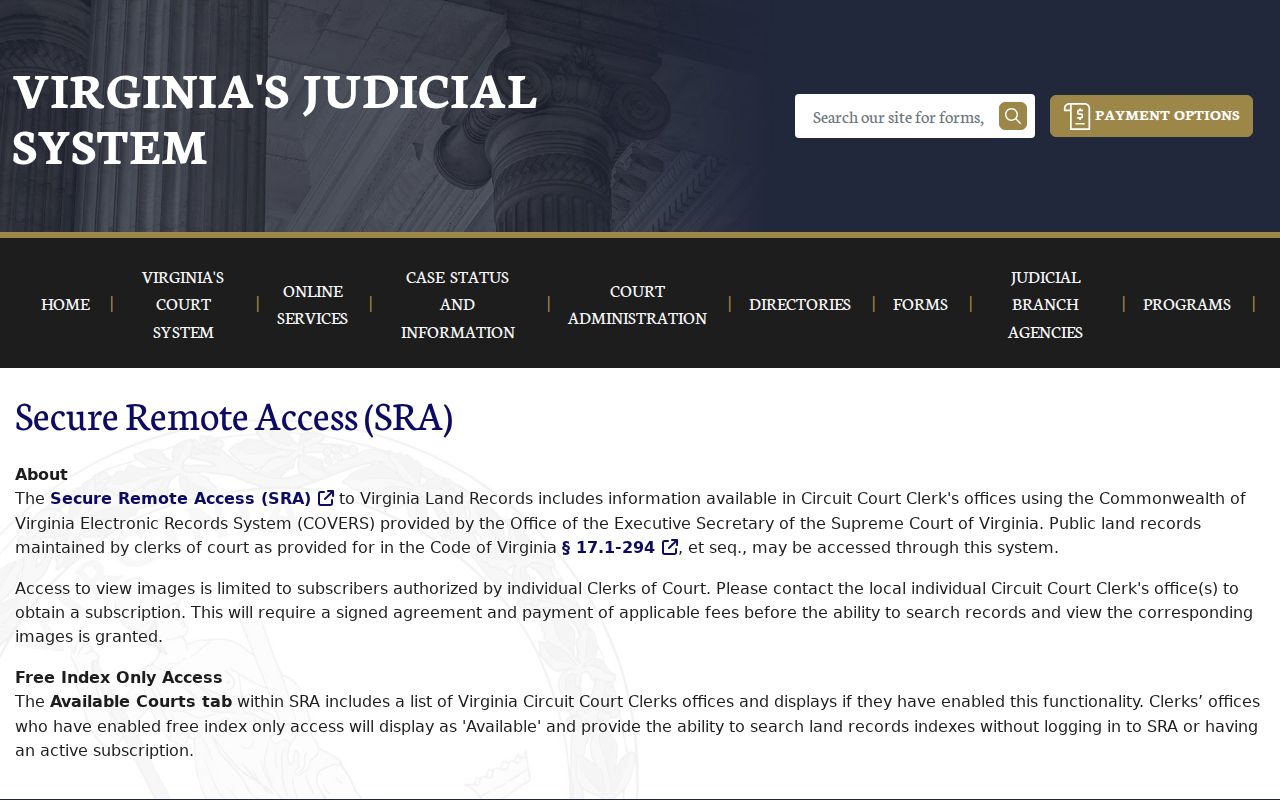
SRA/COVERS is the remote layer for Circuit Court Clerk land records across Virginia. Choose Harrisonburg City, then run each party name in both directions. A result can show the instrument type. It also lists the recording date and a book and page or document number. The index itself may cost nothing. Opening an image is another matter. It can take clerk approval, a signed subscription, and fees. Save the citation even if the deed image stays locked. The Virginia Judiciary SRA instructions explain the access limits.
Party references alone can carry the chain back home.
Harrisonburg City Burnt Deed Books
Rockingham's historical index lists "burnt deed books" as a category dated 1778–1864. The label is a finding aid. It does not mean every early Harrisonburg volume went up in flames. Write down the book and page from the index. Then ask the Clerk or the Library of Virginia. Ask which reel or surviving volume holds that entry. Early names often carry variant spellings or odd handwritten forms. Scan the neighboring entries when the first search comes up thin. The Rockingham Land Records Division describes these regional finding aids. The Library of Virginia locality catalog helps identify microfilm series.
Read the Harrisonburg Deed Chain Backward
Virginia's land-record index turns on parties and instruments rather than parcel numbers. Begin with the latest deed and let its grantor lead you to the prior purchase. Write down both dates, recording and deed. They answer different questions about the property records. One fixes the public record. The other fixes the private transfer. Also search initials, middle names, entity names, trustees, and estate representatives. Any of them can hide the owner of record you need.
- Find the latest deed with the present owner as grantee and copy its full legal description.
- Write down the grantor, deed date, recording date, instrument type, and reference.
- Search that grantor as a grantee in an earlier period and compare the description.
- Repeat until a probate event, changed tract, or index limit requires another source.
- Grantor
- The party conveying an interest.
- Grantee
- The party receiving an interest.
- Chain of title
- The ordered record of transfers tied to the same land.
- Legal description
- The lot, tract, or boundary wording used to match older deeds.
Harrisonburg City Newtown Deed Leads
The Northeast Neighborhood material offers unusually concrete leads for historic land research in Harrisonburg. It traces Newtown to purchases by formerly enslaved men. Reuben Dallard, for instance, bought lot 57 and half of lot 58 in the Jacob A. Zirkle addition. Johnson Street purchases get a mention too. Treat these as parties and places. Test them against the recorded deed books, not as a finished ownership chain. Zenda's history adds a post office, a schoolhouse, a chapel, and a cemetery. The city's geography later swallowed the community. A plan like that can steer you toward a street, a lot, or an addition. The chain still stands or falls on a grantor-grantee match in the clerk's deed records. Read the City's Community Connectors history for the neighborhood leads.

Old maps and indexes can open deed-book leads.
Harrisonburg City County-Era Deeds
Harrisonburg served as Rockingham County's seat from 1780 and became an independent city in 1916. Several later annexations expanded it further. A former-owner chain can therefore wander across jurisdictions. It may touch county-era deeds, city records, and today's City assessment cards. Treat that as a change of jurisdiction, not a break in ownership. Match the legal description and lot references instead of a modern street name. A historic deed may say Rockingham County while the current tax card says Harrisonburg City. Use the official growth history to guess the era. Then confirm each instrument in the right clerk record. The City history page gives the annexation timeline.
Harrisonburg City Newspaper Clues
Massanutten Regional Library's local-history room holds maps, books, manuscripts, oral histories, photographs, local indexes, and microfilm. Its genealogy page describes Rockingham Register material from October 1822. A separate guidelines page lists an 1861–1904 run. The Daily News-Record starts in 1913. Page News & Courier runs from 1998 through the prior year. These collection descriptions differ in scope. So ask staff to confirm the reel before you cite any date span. Sale and estate notices in old papers can point toward former owners. An obituary or a street directory proves nothing about title. Anchor the name and date to a deed. A probate record, an assessment card, or a plat works too. MRL staff help with local-history questions and with the microfilm readers and databases. See the MRL genealogy and history collection for the property records leads.
Harrisonburg City Estate Breaks
A clean sale-to-sale chain can stall at a death, an inheritance, or a court-approved transfer. Corrections complicate it too. Harrisonburg's Real Estate Office relies on wills, lists of heirs, deeds of correction, and other Clerk's Office records to process these ownership changes. The paper trail usually survives in more than one form.
To reconnect the chain, search the probate docket and the land records side by side. Keep going until you find the instrument linking the estate to its next grantee.
Leave a gap visible in your worksheet. Do this whenever the names or the property description fail to line up. Resist the urge to bridge two people who share a surname. If the chain reaches back past the city's online index, the historical index and clerk books, the Library of Virginia microfilm catalog, and MRL resources can carry the deed records further back for Harrisonburg.
How Far Harrisonburg City Records Reach
Harrisonburg's static public interface publishes no stated earliest year for its online deed records, so treat any cutoff as unconfirmed until the Circuit Court Clerk tells you whether your names and period fall within the city's index. A book and page citation can then continue the work offline. For research before 1941, Rockingham County's finding aids point to historical land indexes and the Genealogy Burnt Deed Books spanning 1778 through 1864.
Lawful use. Harrisonburg City former-owner research supports house history, title work, and property due diligence. Do not use it to track, threaten, harass, or harm a living person.